
Atticus Gregory Upton Lewis
When you think of the music of the 1970s, you think progressive rock withbands breaking away from the confines of their genre and branching out, incorporating styles and instrumentals you wouldn’t expect to hear.
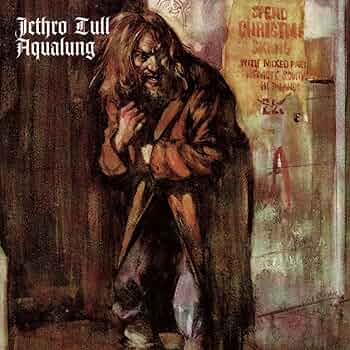
For me, there are no albums to better personify this era than Jethro Tull’s “Aqualung”. While the band never intended for the album to have a deeper meaning or concept beyond having a few tracks line up well, it was interpreted, and became, a discussion on homelessness, grief, and the role God plays in society.
The first half of the album covers homelessness, and the band’s perspective on it, through a character named Aqualung, a homeless man with breathing problems.
Through him, the band shows life through his experiences. When I first heard the riff in “Aqualung,” I realized I had heard it in songs that would come much later, showing the album’s influence over the genre. The song is the intro to discussing homelessness through the eyes of Aqualung. He sees the schoolgirls, who become important in the second track, and watches them with ill intent. He goes to wash by the river and remembers either what will be or what has been the last breath he took in Winter.
It’s not just about how Aqualung sees himself or what he does, it’s just as much as how we see him. Our revulsion, our pity, our guilt are all present here. “Cross-Eyed Mary” introduces the incorporation of the flute instrumentals that this album would come to be known for. It brings in the gritty lyrics matching this era of rock perfectly. The track is about a girl and her being as a prostitute to make ends meet; explaining why Aqualung watches her even when she attends school. It isn’t an empowering or depressing track in sound, but it is very sobering and realist.
The third and fourth tracks, “Cheap Day Return” and “Mother Goose,” which are often performed together as a pair, kicks off the second section. “Cheap Day Return” is about a trip band frontman and songwriter Ian Anderson took to see his father who was terminally ill. He describes his way home on the trains in the cold.
As if to contrast this, ‘Mother Goose’ is about a peaceful stroll reminiscing on the hippy vibe. The fifth track, “Wond’ring Aloud,” is about Anderson’s relationships and the value he saw in them. It is about a peaceful relationship and all that comes with that vibe—a love song through and through. The sixth track, “Up to Me,” is about taking control of your situation and holding yourself accountable,.
“My God” is the track to kicks off the final third of the album. It begins with a condemnation, not of God, but of those who speak for him in either churches or believers.
He goes further in his condemnation leading to the hardest riff on the album and the lyric, “Don’t lean on him to save you from your social graces.” “Hymn 43” goes further with this by inverting Christ’s initial defense of humanity from God by showing God how both He and God are both misused.
“Locomotive Breath” is about overpopulation running wild. Interestingly, it doesn’t condemn it by alluding to the train crashing, only stating that the train is out of control.
The final track, “Wind Up” is another condemnation in how people use God, treating him like a wind-up toy they play with on Sunday.
He pointed out this hypocrisy and was condemned in Sunday School for it. He even gets the wind-up metaphor from God directly where God states, “I’m not that kind of god.”
I believe Aqualung by Jethro Tull to be a Top Ten if not a Top Five album of the 1970s. It perfectly encapsulates that era of music with its unique riffs, the inclusion of new instrumentals to rock, and the dark lyrics that directly challenge the orthodox attitude and sound of the 1960s.
For me, this album is a perfect record that, while perhaps not intentionally, has become a standard for concept albums not just in the rock genre, but in any genre. An absolute must listen for not just 70s music fans, but for any music fan.
Atticus Gregory Upton Lewis is a native Jeffersonian. He can be reached at aghuptonlewis@gmail.com
Discover more from Marion County Herald & Jefferson Jimplecute
Subscribe to get the latest posts sent to your email.